Asus ROG Strix XG32UQWMS review
About
Overview
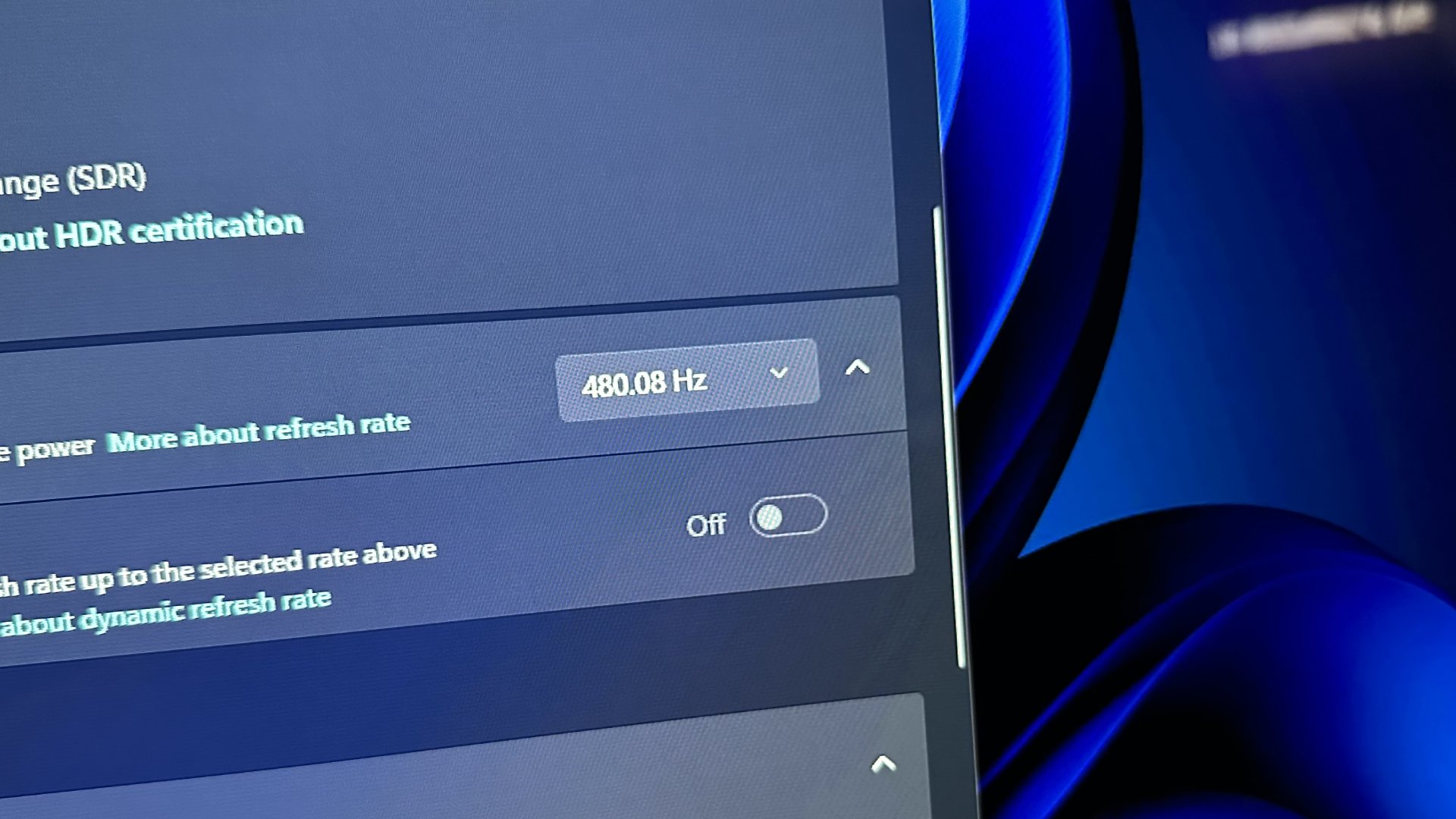
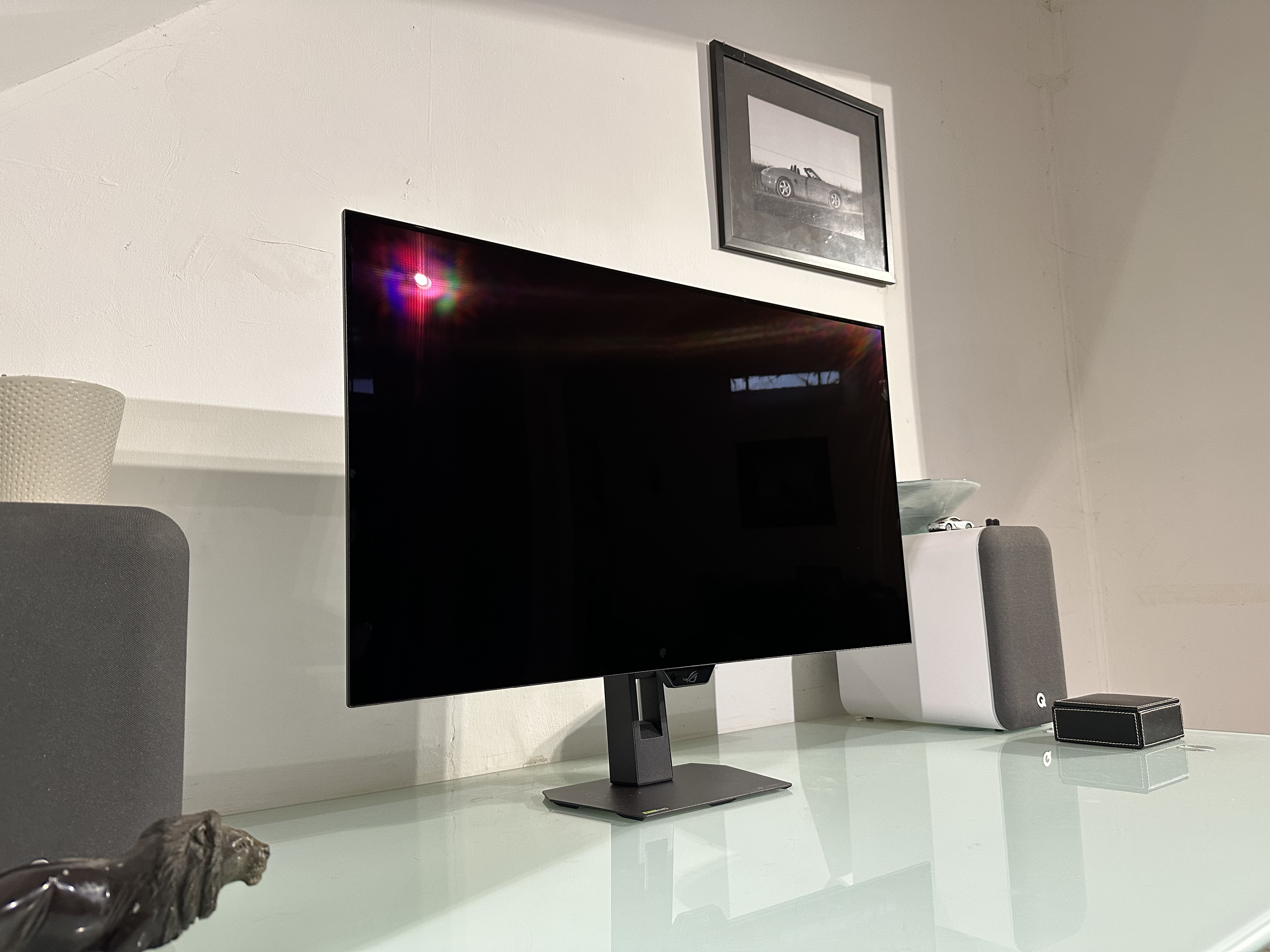
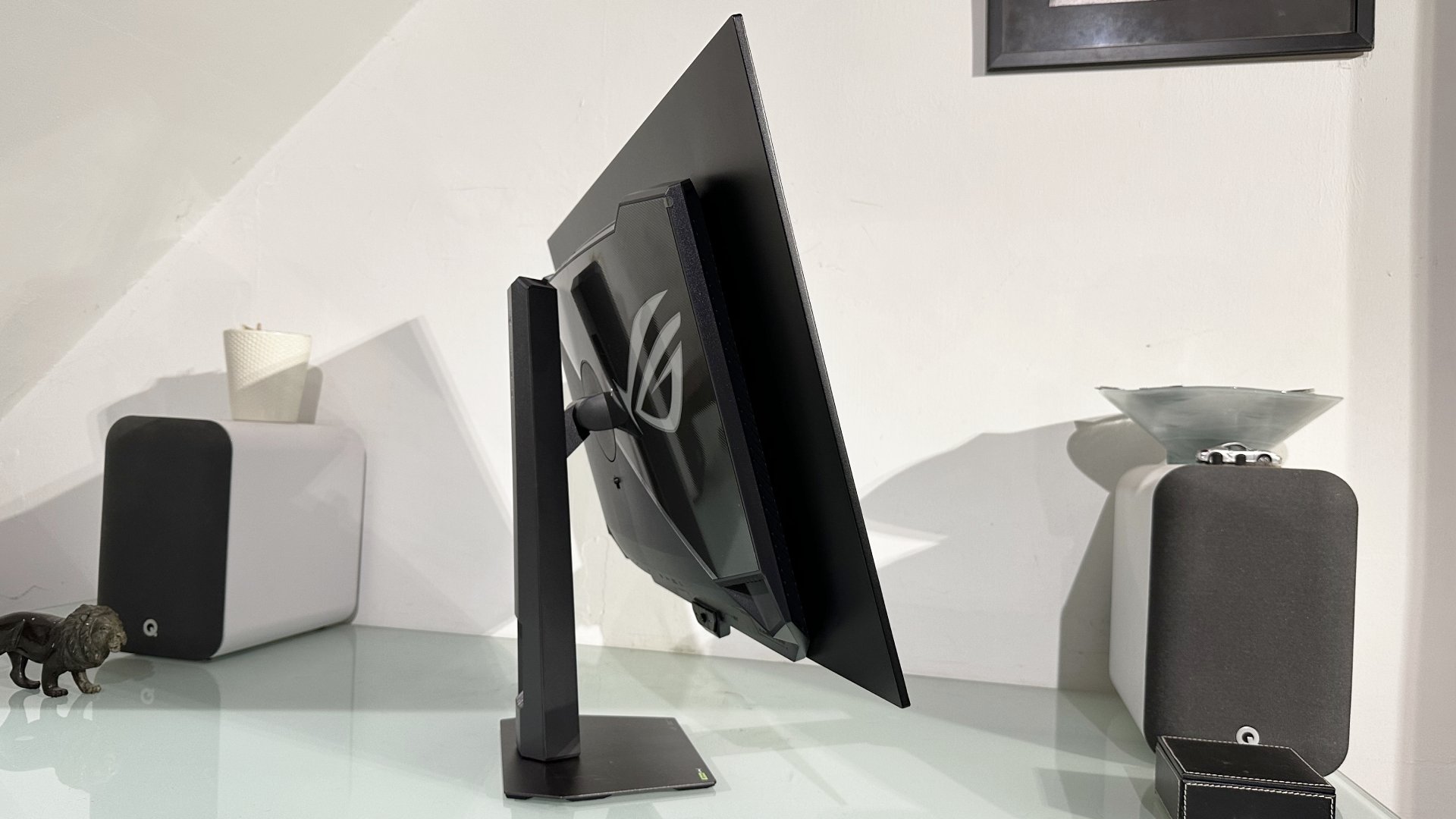
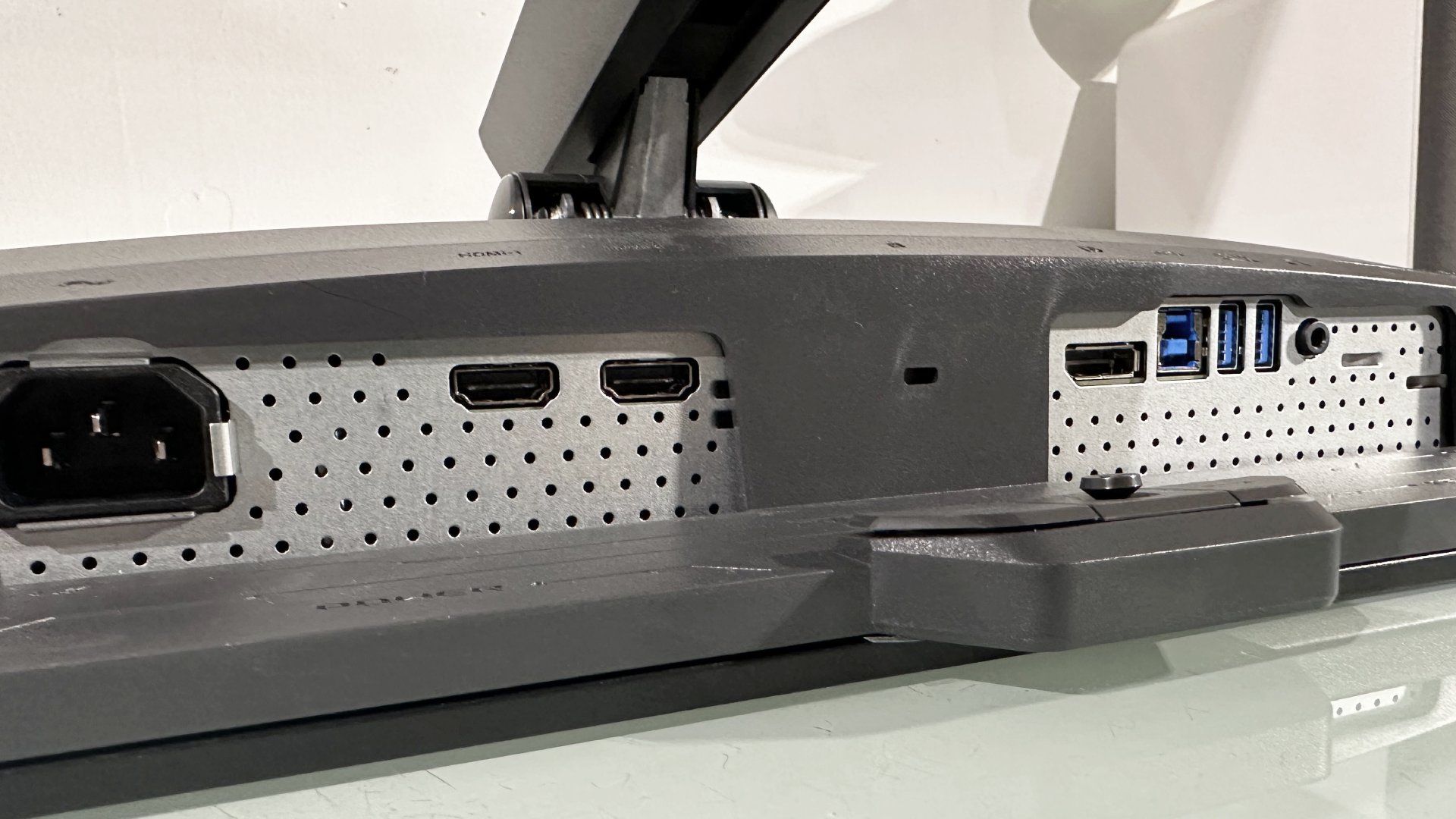
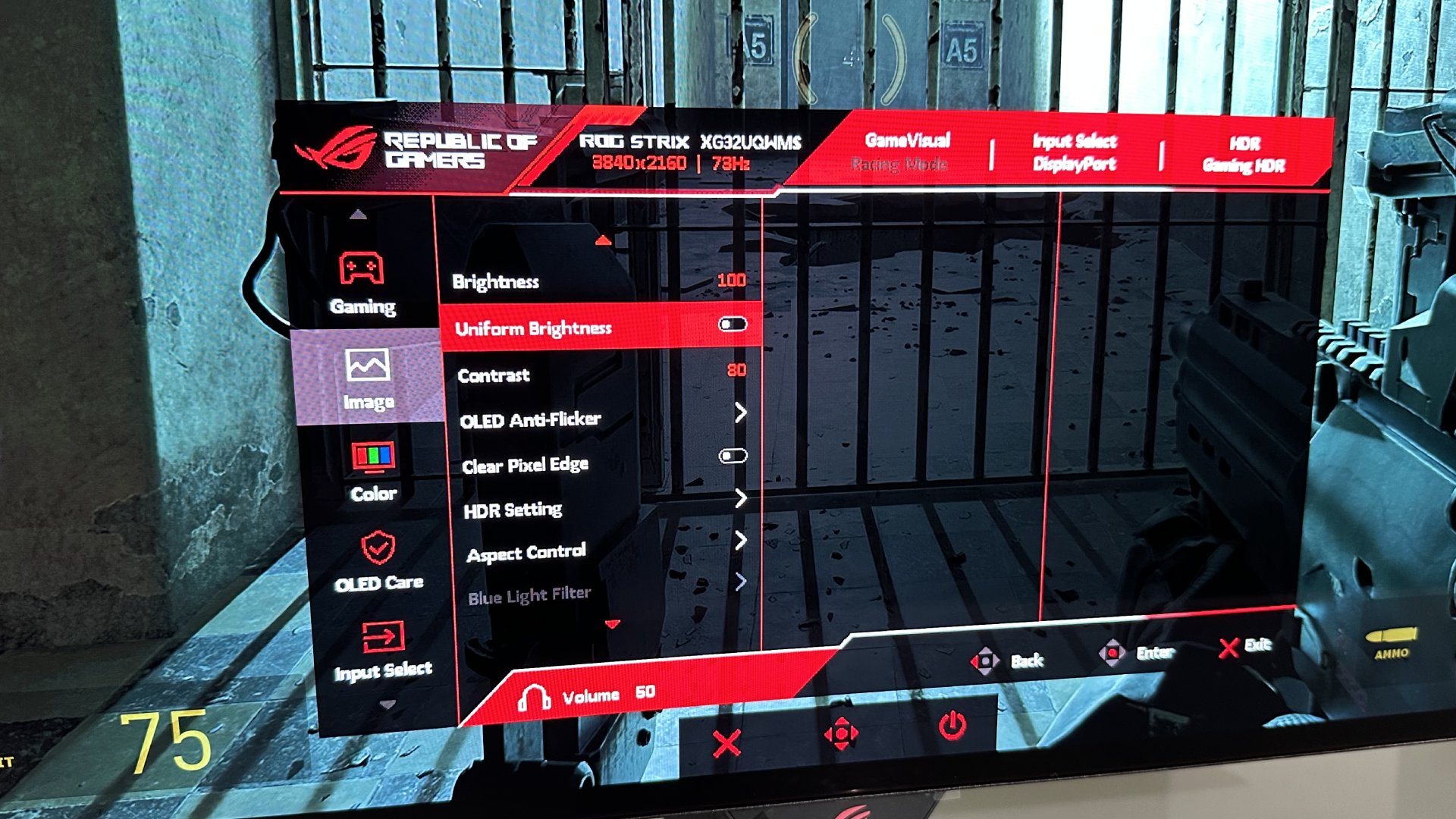
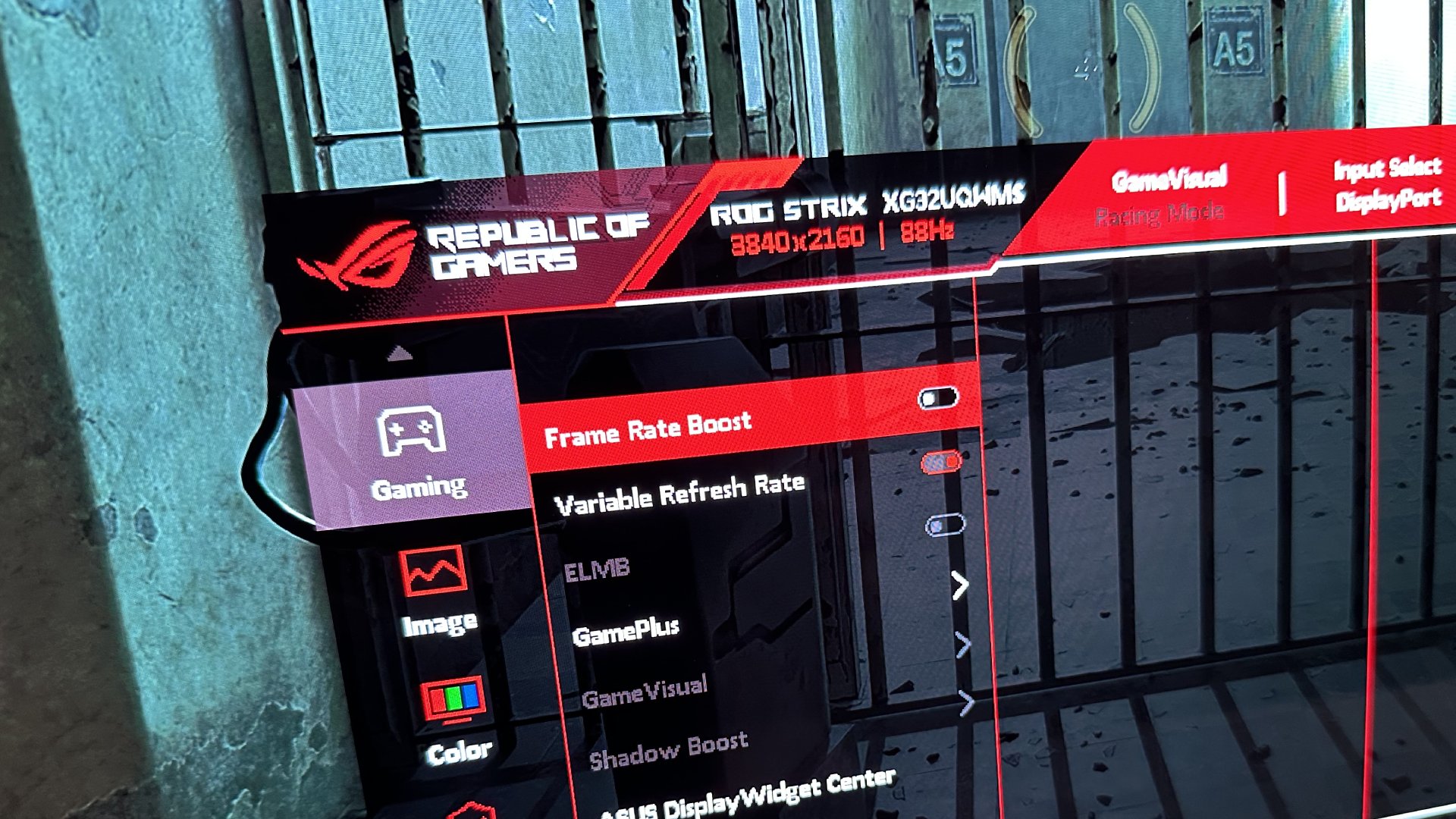
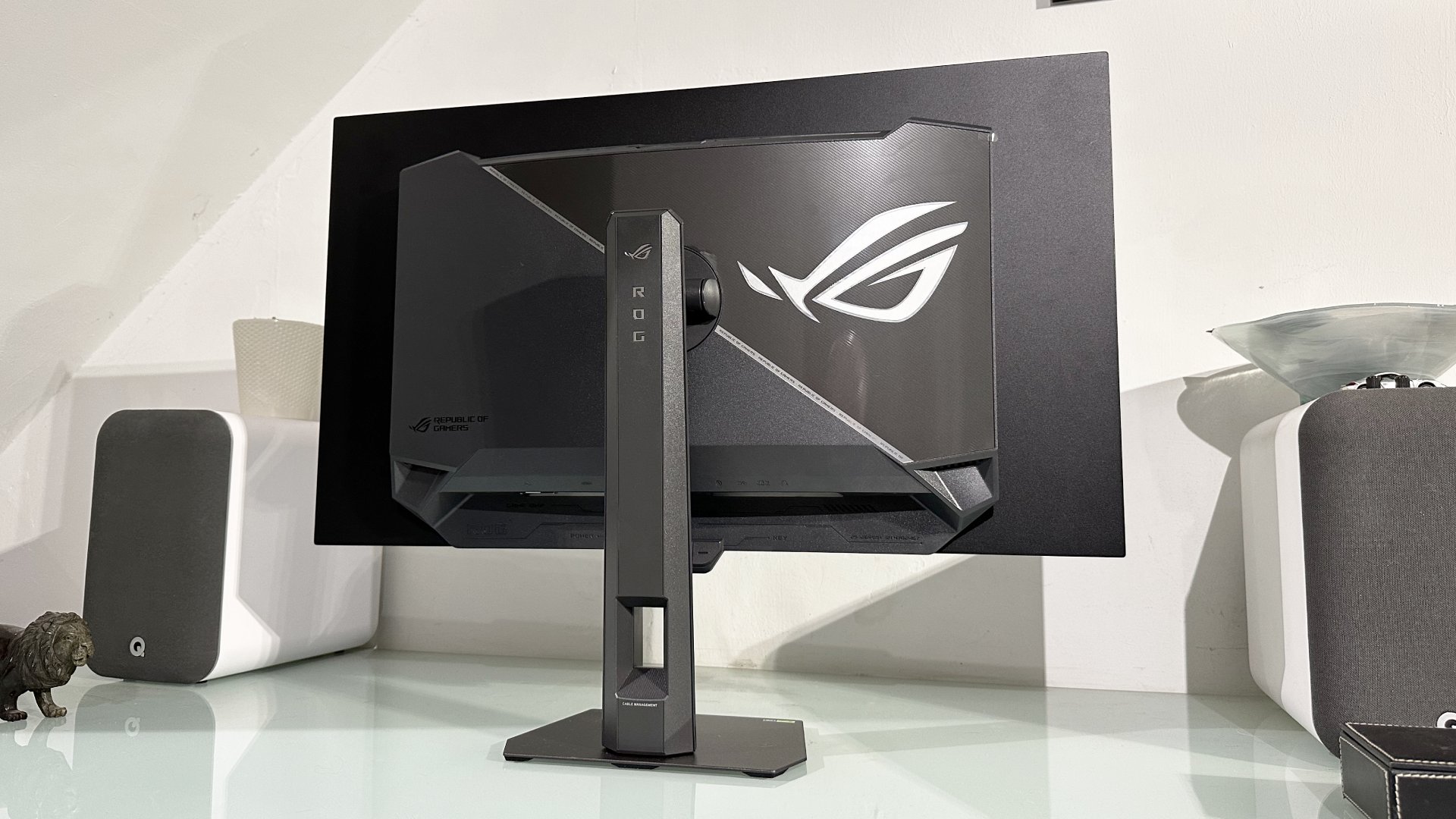
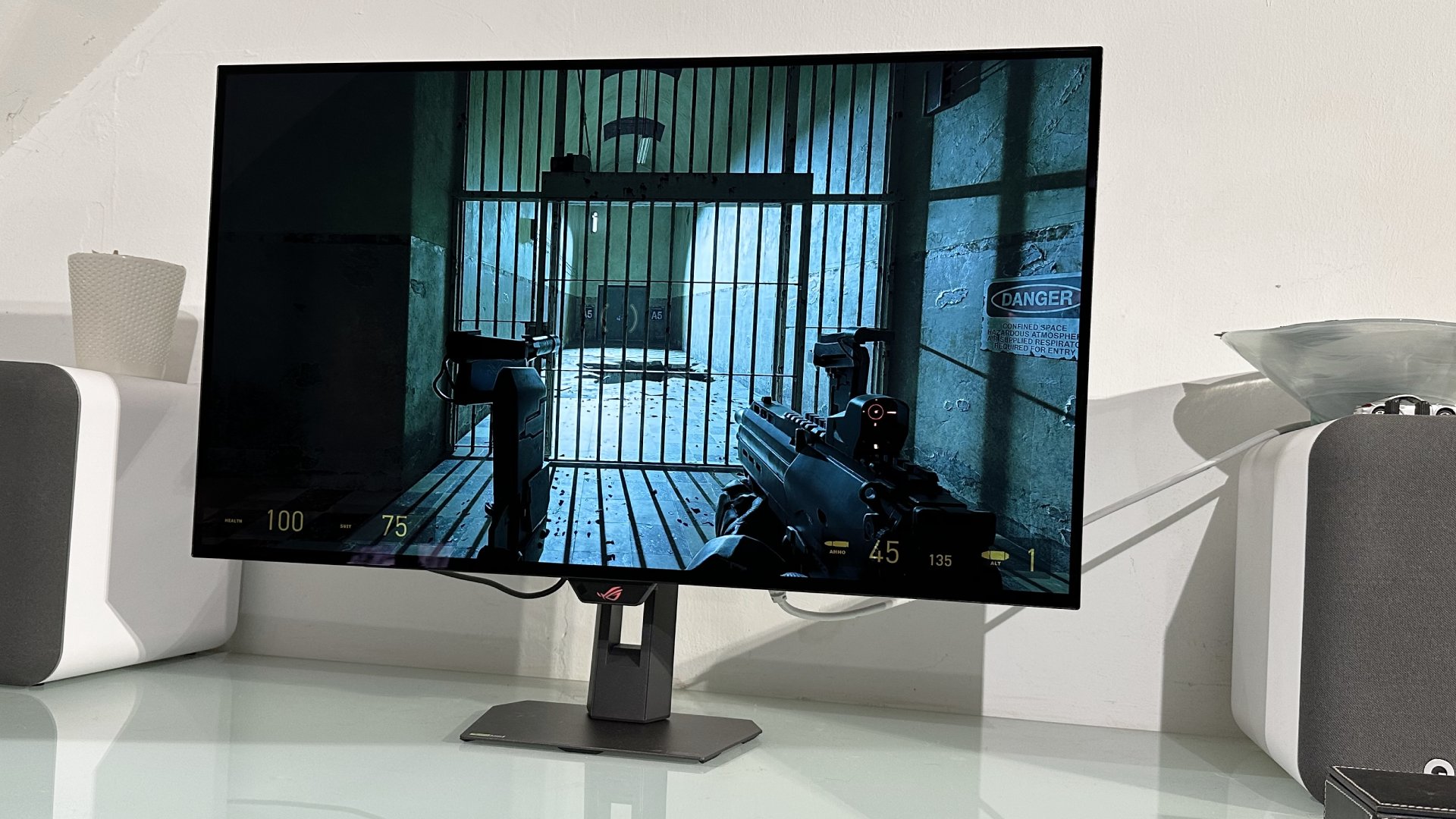
Asus isn't the immediately obvious pick when it comes to value-orientated PC hardware. But its mainstream Strix sub-brand does occasionally deliver some pretty sweet deals. Enter, therefore, the new Asus ROG Strix OLED XG32UQWMS. It's a 32-inch, 4K gaming monitor based on LG's latest Tandem Primary RGB OLED panel tech, the specifics of which we'll come to shortly. And it's yours for $899, which is a pretty punchy price for a 32-inch 4K OLED with the very newest panel tech. However, as a Strix model, the XG32UQWMS doesn't throw everything at the wall when it comes to features. Well, that's the theory. In practice, the XG32UQWMS has an awful lot of the stuff you'd want from a gaming display. Screen size 32-inch Resolution 3,840 x 2,160 Brightness 330 nits full screen, 1,500 nits peak HDR Response time 0.03 ms Refresh rate 240 Hz @ 4K, 480 Hz @ 1080p HDR DisplayHDR True Black 500 Features LG Tandem OLED panel, G-Sync, 2x HDMI 2.1, DisplayPort 1.4, USB-A hub Price $899 | £890 ✅ You want the latest LG Tandem OLED tech: Asus has gone for LG's latest and brightest LG Tandem OLED panel option. ❌ You're expecting RGB-stripe subpixels: There is an LG Tandem OLED with RGB-stripe and Asus will use it, but not in this monitor. The one obvious omission is USB-C connectivity. But then that's not an unambiguously gaming-adjacent feature, albeit it is desirable for use with a gaming laptop and likewise if you're planning on sharing this monitor between a gaming rig and, perhaps, a work laptop. Anyway, apart from the LG-supplied OLED panel itself, there's one little extra that's worth mentioning first. Along with the 240 Hz available at the OLED panel's native 4K resolution, there's also a 1080p dual mode running at fully 480 Hz. Yes, these kinds of dual mode features are increasingly common on 4K gaming monitors. But given the Strix branding and relatively competitive pricing, not to mention the fact that not many OLED 4K monitors have yet offered it, you still might not have expected it on this particular model. As for other specifications, this Asus represents a step up in terms of brightness compared with previous 32-inch 4K monitors with LG OLED models. The full-screen rating is now 330 nits, up from 275 nits on earlier models. Asus is also quoting fully 1,500 nits for peak HDR brightness in a small window. Notably, both of those figures are well up on the 300 nits and 1,000 nits, respectively, that MSI claims for the MPG 322UR X24. That MSI model uses the latest QD-OLED 32-inch 4K panel from Samsung. So, on paper at least, this new LG panel tech seems to have the edge over Samsung. For what it's worth, both this new Asus and the MSI get VESA DisplayHDR True Black 500 certification. Despite all that, the MSI is quite a bit more expensive, at $1,099. There are a few other upsides beyond mere brightness that come with this latest LG Tandem OLED generation. First, there's a glossy panel coating. That's not to everyone's taste, but it certainly heightens one of the main strengths of OLED tech, namely contrast. There's also more colour performance, now up to 99.5% of the DCI-P3 gamut and much more competitive in that regard with Samsung QD-OLED. Asus also says this generation of LG OLED panel tech is 60% more durable in terms of light-emitting lifespan and so should resist burn-in even more robustly, an issue which is covered in any case by the three-year warranty. What you don't get, however, is true RGB-stripe sub-pixel structure. What you don't get, however, is true RGB-stripe sub-pixel structure. Confusingly, the "Primary RGB" nomenclature LG applies to this new panel tech refers to the layers of emissive material actually within each subpixel. The sub-pixel structure itself remains the RGWB or red, green, white, and blue layout seen in many recent OLED panels. Strictly speaking, pure RGB and without the white sub pixel LG adds to boost brightness offers both better rendering precision and superior colour fidelity. For the record, Asus has announced a monitor with LG's new Tandem OLED panel that does have pure RGB-stripe subpixels, the ROG Swift OLED PG32UCWM. But that monitor is not this monitor, and the Swift models always command a much higher price. Whatever, as is usual for all these OLED panels, response is rated at a startlingly scant 0.03 ms. In short, pixel response is essentially a solved problem with modern OLED panel tech. Rounding out the main features are dual HDMI 2.1 inputs, DisplayPort 1.4, a USB hub and support for G-Sync adaptive refresh technology on Nvidia GPUs and FreeSync on AMD GPUs. Incidentally, this may be an Asus Strix model and therefore not its most premium offering, but the build quality is still decent. Okay, you miss out on pivoting the panel into portrait mode. But all the other adjustments, including tilt, height and swivel are included and, frankly, it's every bit as well put together as an 8K Asus monitor I happen to have in at the moment that sells for an incredible $8,800. With all those details covered off, well, it's time to get to the main event. How good does this new LG Tandem OLED panel tech look in 32-inch 4K format and, likewise, how does it stack up against the Samsung QD-OLED competition as represented by the MSI MPG 322UR X24? Out of the box, it's immediately apparent that this new panel has both more punch and more colour vibrancy that the previous LG-sourced 32-inch 4K OLED panel. But there are caveats. Subjectively, the full screen brightness is a little disappointing. With a large proportion of the panel being driven hard, it's definitely duller looking, subjectively, than the MSI. If that seems to contradict the paper specs, well, this Asus monitor has to rely on LG's additional white subpixel to hit that 330 nits full-screen figure. In practice, the white subpixel doesn't automatically boost brightness for colours as opposed to pure white. So, much of the time, that 330 nits rating is a bit notional. As with most OLEDs, you can boost the brightness by disabling the ABL or automatic brightness limiter, which Asus refers to as the Uniform Brightness setting. More than with QD-OLED panels, the overall panel brightness varies substantially depending on how much of the panel is being lit up. However, more than with QD-OLED panels, the overall panel brightness varies substantially depending on how much of the panel is being lit up. It only requires a disappointingly small application window, such as a web browser, showing a predominantly white image, to have the panel dimming quite noticeably. Even using dark mode for most apps, the panel will quite often dim in a manner that the QD-OLED competition doesn't, not quite. That said, this monitor can still deliver some spectacular visuals for HDR content. It's at its best when rendering small bright details on a dark background. That's when you'll get the full 1,500 nits and a truly eye-popping experience. That's not the reality for most games, most of the time of course. And for day-to-day gaming I'd give the subjective edge to the MSI monitor and its Samsung panel. It's that little bit more vibrant, that little bit more immersive. Of course one thing the MSI lacks is a 1080p dual mode. So, how does that factor into the equation? Certainly, this Asus Strix is lightning fast running at 480 Hz. The motion clarity is pretty stupendous ripping your mouse around in an online shooter like Counter-Strike 2, ditto the lack of latency. The motion clarity is pretty stupendous ripping your mouse around in an online shooter like Counter-Strike 2. The image quality at 1080p is also among the best I've seen in terms of pixel definition on a 32-inch 4K panel running in dual mode. But the thing is, if you're really serious about esports, do you really want to be playing on a 32-inch monitor? I suppose you could mimic the apparent size of the preferred 24-inch monitor by pushing this thing further away. But I'm not totally convinced that's a satisfactory solution for someone who plays loads of online shooters. And if you don't, I can't see you using the dual mode much. What I can say for sure is that I still give the slight edge to Samsung's QD-OLED tech. Yes, even the latest QD-OLEDs have a slight purple tint in bright ambient light that you entirely sidestep with LG's Tandem OLED panels. But, overall, QD-OLED still feels noticeably more vibrant and colour rich. Moreover, the variable brightness on this Asus's LG panel when you disable uniform brightness in order to get the best performance is also more noticeable and more distracting. All that said, there's a price differential to take into account. This Asus goes for $899 to the MSI's $1,099. Personally, I think the MSI is worth the extra $200 for a bit more subjective pop and USB-C connectivity. But the value proposition is certainly very tight between the two. And if you don't care about USB-C but would like the 1080p 480 Hz dual-mode feature, well, the Asus ROG Strix OLED XG32UQWMS is pretty compelling.Buy if...
Don't buy if...

Details
Source
Originally published at www.pcgamer.com.
Related Articles
- Bethesda confirms Fallout 3 and New Vegas remasters, makes Obsidian collaboration official, and says Fallout 5 is in 'pre-production'
- No, Modern Warfare 4's Gunny loadout assistant isn't a chatbot, but its developer is using AI elsewhere
- We Build LEGO Ideas Peanuts: Snoopy’s Doghouse, a True Joy for Fans of This Beloved Beagle and Bird